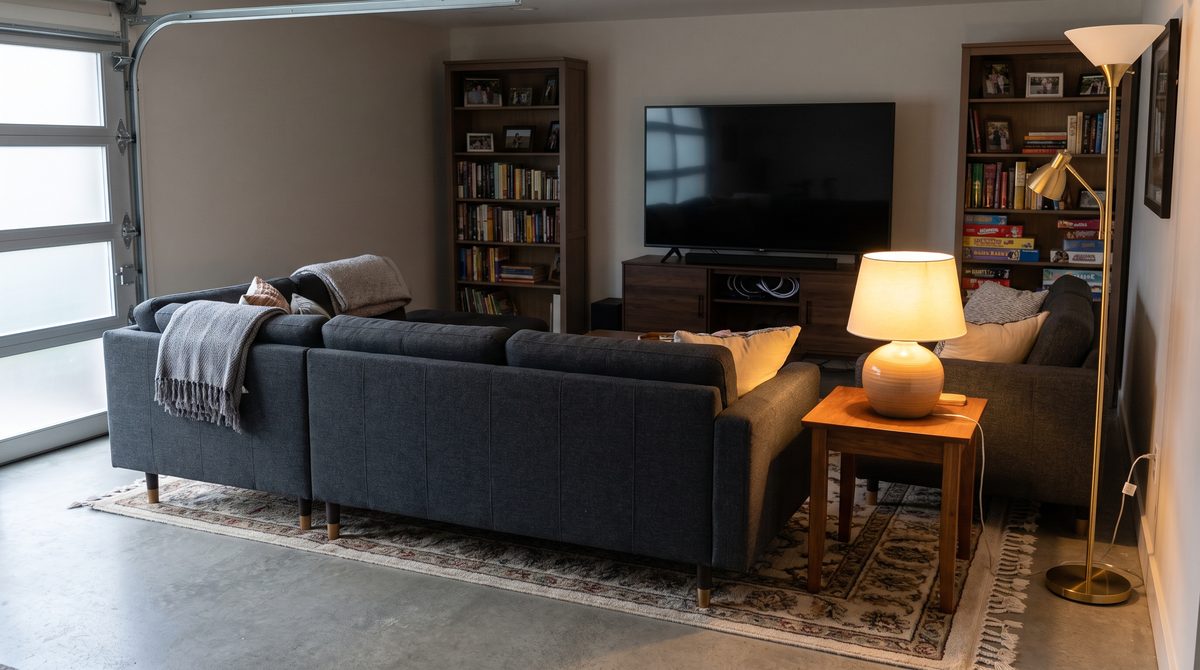
Most man cave regrets are not design mistakes. They're ordering mistakes: the right things bought in the wrong sequence, or the wrong thing skipped because it wasn't visible on move-in day. A room can look finished in photos and still fail on the things nobody photographs, like whether the door seals, whether there's an outlet where the fridge needs to go, or whether anyone actually agreed the space was off-limits. The list below is built from the failure modes that actually sink these rooms, not the obvious advice everyone already knows.
The do's
1. Buy the seating before the television. The screen is the thing everyone overspends on because it's easy to justify and fun to shop for. The chair is what actually decides whether anyone sits through a full game or movie, and it's usually the first line item cut when the TV budget runs long.
2. Measure clearance for anything with moving parts before you buy it. A pool table needs roughly four feet of clear space on every side for a full-length cue, a dartboard needs a real throw line, and a golf simulator needs both ceiling height and swing room behind the hitting zone. Buy the item first and you're rearranging a finished room around a mistake.
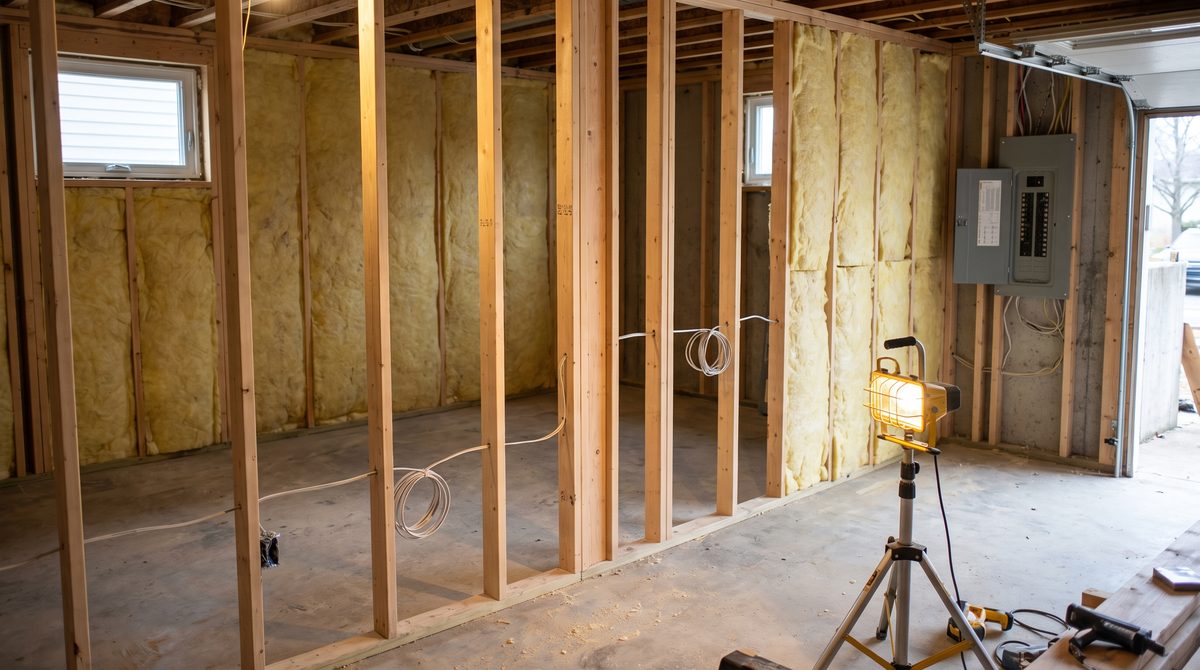
3. Rough in more electrical circuits and outlets than the current plan calls for. Adding a circuit after drywall is up means opening finished walls; adding it during the build is a line item. Assume you'll add a fridge, an amp, a second monitor, or a space heater eventually, because you will, and put outlets at the height and spacing that matches how the room will actually be used, not just along the baseboard.
4. Treat ventilation as its own line item, not a byproduct of finishing the room. Basements and garages trap moisture, and without real airflow that moisture works on electronics, upholstery, and anything leather or felt long before you notice a problem with your eyes.
5. Decide the walkway before you decide the furniture. Walk your actual build plan through the actual door and stairs, with real dimensions, before you order anything large. A pool table or sectional that won't clear the doorway is a return, a restock fee, and a wasted weekend, and basement stairwells with a turn in them are where this goes wrong most often.
6. Put real money into soft surfaces if the room has hard walls and a concrete or slab floor. A rug, curtains, and some acoustic panel or foam do more for how a garage or basement actually sounds than any speaker upgrade, because bare concrete and drywall bounce every frequency back at you.
7. Set the house rules for the room out loud before it's finished. Decide who can use it, when, whether guests or kids are welcome, and whether it locks, and say it to the people you live with. A room's existence doesn't establish its rules; a conversation does, and skipping it turns a design project into a recurring argument. This matters more the earlier the room is built in the relationship or the household, before habits form on their own.
8. Leave one section of the room unfinished or general-purpose. A wall, a shelf run, or a bank of outlets kept open costs you nothing now and saves you from tearing out a themed build later, because the hobby list you have on move-in day is rarely the one you have two years in.
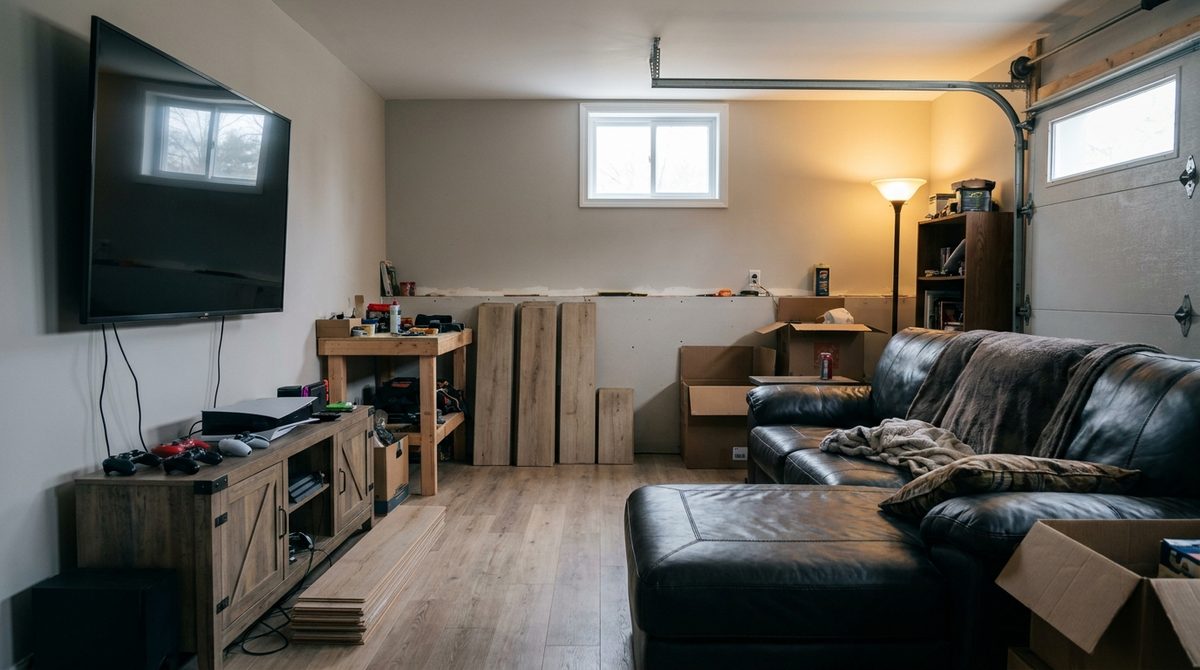
9. Choose flooring for the abuse it will take, not for how it photographs. Spilled drinks, dropped weights, rolling chairs, and a cold slab underfoot matter more day to day than whether the finish matches a mood board. If the room sits over concrete, plan for something underfoot that isn't just cold to stand on for a three-hour game.
10. Build closed storage into the plan from the start. Cabinets, bins, or a dedicated shelf give the seasonal and overflow stuff a home that isn't the floor of the room, which is the single biggest thing that keeps a man cave from slowly becoming a storage unit with a couch in it.
The don'ts
11. Don't lead with the television purchase. It's the easiest expense to justify and the first place budgets run past reasonable, which routinely leaves nothing for the seating people will actually spend hours in.
12. Don't commit every surface to one hard theme. A room that's all one team, all one movie, or all neon reads as an impulse buy rather than a space, and it ages out of style faster than furniture does. Pick a mood, not a costume.
13. Don't finish a basement or garage build without dealing with moisture and airflow first. It's a comfort problem in the short term and a damage problem in the long term, and both are cheaper to prevent than to fix after the drywall and flooring are already down. Cutting the room off from the rest of the house's heating and cooling without a plan for either one is how you end up with a space nobody wants to sit in for half the year.
14. Don't place a bar, mini fridge, or A/V rack anywhere that needs an extension cord to run. A cord across a walkway or under a rug is a trip hazard and a fire risk, and it's also the first detail that makes a finished-looking room read as unfinished.
15. Don't let the room become the household's overflow shelf. Holiday decorations, exercise gear nobody uses, and boxes with nowhere else to go have a way of colonizing a man cave one item at a time. Once that starts, it's hard to reverse, because every item feels like a small exception until the room isn't a man cave anymore, it's just the extra room that also happens to have a couch in it.
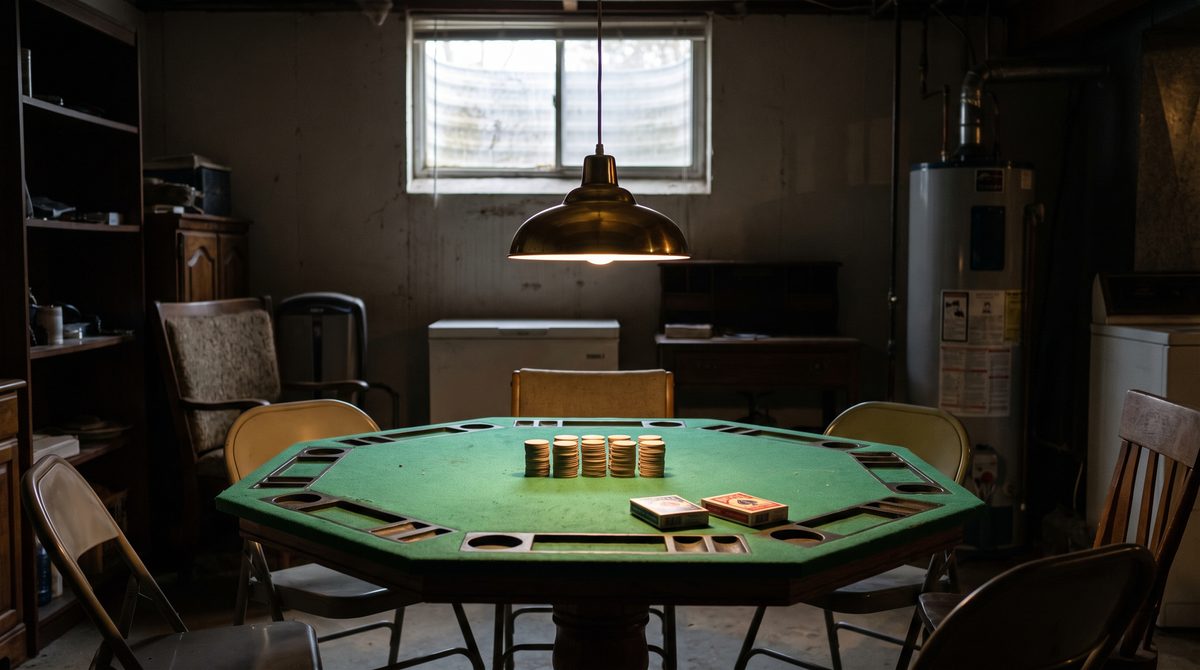
16. Don't rely on a single ceiling fixture for lighting. One bright overhead light is fine for cleaning and terrible for a movie night or a poker night. Layer it: ambient light for the base, task light where you need it, and something you can dim or kill entirely.
17. Don't ignore the door. A hollow-core door with a gap at the bottom does nothing for sound or privacy. If part of the point of the room is closing it off from the rest of the house, the door has to actually do that job, not just symbolize it.
18. Don't assume everyone else in the house already knows the room is off-limits. Assuming agreement without ever stating it is how a man cave becomes a shared laundry-folding spot within a month. Say the rule before you need to enforce it.
19. Don't buy the heaviest, least-flexible furniture you can find for a room that also needs to host poker night, a workout, or a kid's sleepover once a year. A sectional that can't be moved by one person locks the room into a single use, and most man caves need to flex more than that.
20. Don't treat the build as finished the day the last shelf goes up. HVAC filters, humidity checks, and a basic cleaning routine are what keep the room in use. A man cave with no upkeep plan doesn't stay a man cave; it quietly turns into storage within a year, and nobody decides that on purpose, it just happens.
What to do first
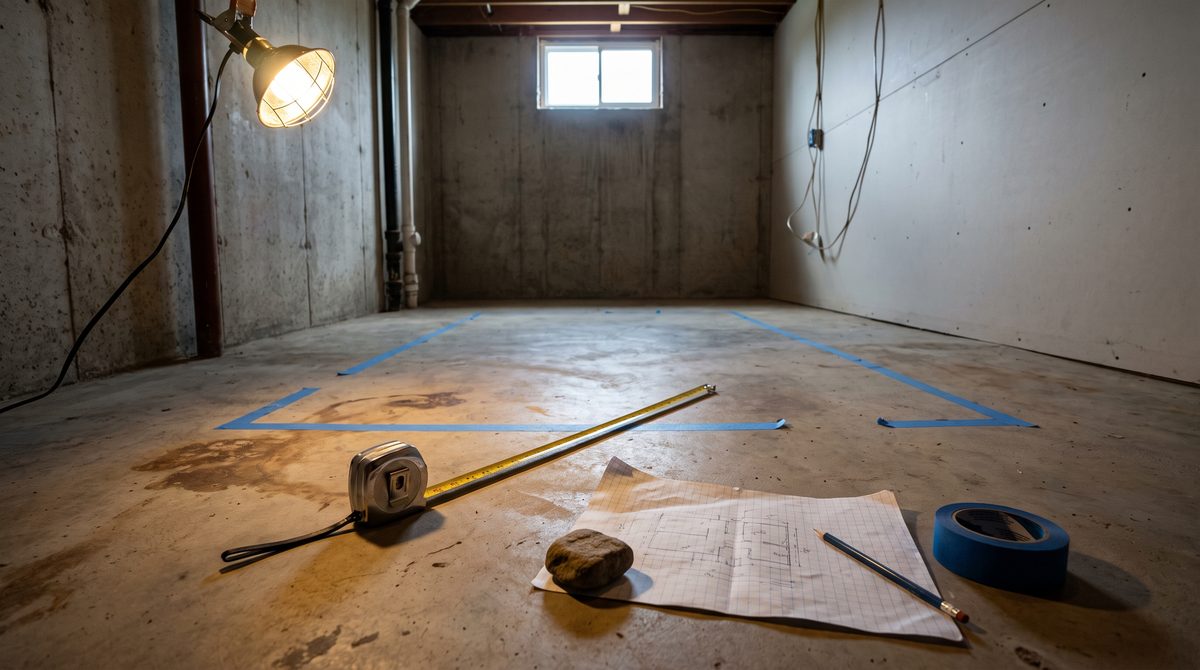
Before you buy anything, walk the room with a tape measure and figure out three things: what has to pass through the door, where the outlets currently are, and whether the space has any real airflow. Those three answers will rule out more bad purchases than any amount of browsing, and they cost you an afternoon instead of a return trip. Write the answers down and have the conversation about house rules on the same afternoon, before the room has anything in it worth arguing over.