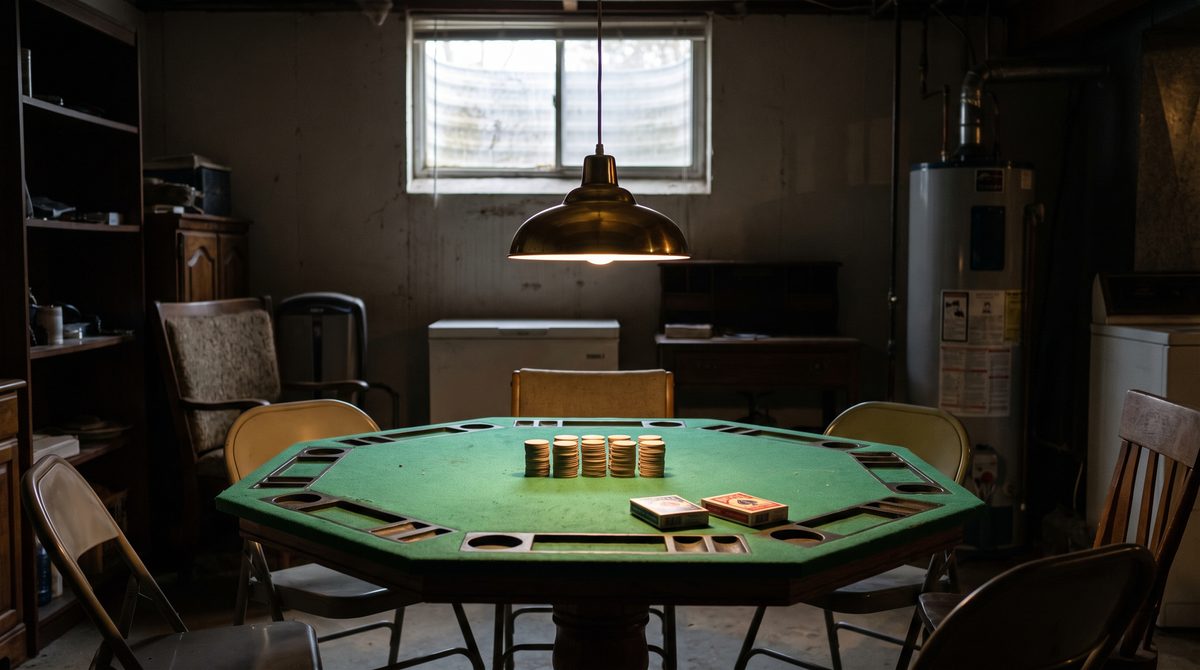
Before you send the group text, decide what kind of night you're actually running: a loose few hours of cards with friends, or something closer to a standing monthly game. That answer decides the table, the stakes, and how strict the rules need to be. Get the setup right once and every game after this one is just showing up.
How much room does a poker table actually need
A full poker table, the oval kind that seats eight to ten, typically runs somewhere around 88 to 96 inches long and 44 to 48 inches wide. Around that footprint you need clearance on every side for a pushed-back chair plus a walking lane behind it, at least three feet of clear space on all sides, more if people need to get up and down often. Run the math before you commit a room to it: an 8-foot table with three feet of clearance on every side needs a floor footprint close to 14 by 10 feet, before you add a bar cart, a TV, or anywhere to set drinks down.
Eight players versus six
Dropping from eight seats to six is the easiest way to make a tight room work. A six-person game fits comfortably on a smaller round or octagonal table, often in the four-foot range across, and the room footprint shrinks with it. It also changes the game itself: fewer players means more hands per hour and less time folded out waiting, which suits a room where people are also talking, eating, and watching a game on a second screen.
If a dedicated table doesn't fit
You don't need a piece of furniture that only does one thing. A fold-up poker table stores against a wall or in a closet and comes out for game night, solving the space problem the rest of the week. A folding table topper does the same job over a dining or utility table you already own, adding the felt surface and padded rail without needing a table of your own.
Seating, and why dining chairs ruin a long game
A poker night runs three to five hours if it's going well, and a dining chair was never built for that. No cushion depth, no back support past your shoulder blades, and a seat height that puts your arms at the wrong angle for the table edge. An hour in, people start standing to stretch. Two hours in, they're distracted by their own discomfort instead of the game.
What actually matters is real seat padding, a back tall enough to lean into, and arms low enough to clear the table rail without banging into it every time someone reaches for chips. Folding chairs with a padded seat and back solve this without a full furniture purchase, and they store as easily as a folding table does.
Lighting over the table, not lighting over the room
A single ceiling fixture lighting the whole room is the wrong tool for cards. It puts even light everywhere and strong light nowhere, so faces, chip stacks, and card suits all sit in the same flat wash. Poker rewards light aimed down at the table surface: it makes chip colors and suits easy to read at a glance and puts everyone's hands and faces in clear light without glare bouncing off a nearby screen.
A pendant or hanging fixture centered directly over the table, on its own switch or dimmer separate from the room's general lighting, does this properly. It also keeps the edges of the room dimmer, which makes the table read as the obvious center of the night rather than one bright object competing with everything else in the room.
Chips: denominations and count matter more than the case
A chip set's case is the least important thing about it. What decides whether the set actually works is how many chips you have and what values they represent, not whether they arrived in a nice aluminum box.
For denominations, you want enough distinct values to cover a full range of bets without needing a dozen chips to make change for one raise. Three to five colors covering a low, medium, and high value is enough for almost any home game, with the lowest value set to whatever your smallest bet actually is.
For quantity, size the set to your seat count, not to whatever number the set happened to come in. A set built for six will feel thin at a table of ten, with players running out of low-value chips and constantly asking for change. More players means proportionally more chips of every denomination, not just more of the lowest one. If you're buying from scratch, sizing for your realistic maximum table saves you from running short on a full night.
Setting the stakes before anyone sits down
The single biggest source of a bad night is a stakes disagreement that surfaces after the cards are already in the air. Agree the buy-in, and what happens if someone busts out, before anyone sits down. Say it out loud to the whole table, not just to the person who asked.
Keep it social. This is a home game among friends, not a night built around how much anyone can afford to lose. Set a buy-in that everyone at the table can treat as the cost of an evening out, and stop there. If someone wants to play higher than the group is comfortable with, that's a conversation to have before the invite goes out, not a negotiation at the table.
Cash game or tournament, and which one your group actually wants
A cash game means chips represent real value throughout the night: you can leave the table anytime, cash out what you have, and rebuy if you bust out and want back in. It suits a group that drifts in and out, where not everyone arrives or leaves at the same time.
A tournament means everyone buys in once for a fixed stack, blinds increase on a schedule, and the night ends when one player has all the chips. It suits a group that wants a defined start and finish, with a winner at the end rather than people cashing out whenever they feel like it.
For a casual home group, the deciding factor is usually attendance, not gambling preference. If people show up and leave at different times, run a cash game. If everyone's committed for the whole night, a tournament gives the evening a natural arc and an ending that a cash game doesn't provide on its own. Whichever you pick, agree on rebuy rules in advance: whether they're allowed at all, and until what point in the night.
House rules worth agreeing before the first hand
A short list of house rules, said out loud before dealing the first hand, prevents most of the disputes that actually derail a home game:
- String bets and verbal declarations. Decide whether a player's stated bet is binding even if their chips don't match it, and whether reaching for chips in stages counts as a raise.
- Phones at the table. Decide whether players can look at their phones mid-hand, since it slows the game and raises questions about outside help.
- Misdeals and exposed cards. Agree what happens when a card flips face up during the deal, before it happens to someone in the middle of a big pot.
- Chip splashing. Ask players to place bets in a stack in front of them rather than tossing chips into the pot, so the amount is never in dispute.
- Time to act. Agree that a reasonable pace is expected, especially late in the night when a slow player can stretch a session another hour.
None of these need to be complicated. They just need to be said before the first hand, not argued about during it.
Food and drink that survives being handled between hands
Cards get touched constantly, so anything that leaves grease, sauce, or crumbs on someone's fingers ends up on the deck within an hour. The best poker food is eaten with one hand and no cutlery: chips and dip portioned into individual bowls rather than one shared plate, pretzels, popcorn, wings with plenty of napkins within reach, or sliders small enough to eat in two bites. Keep drinks in cans or bottles rather than open glasses, and put a coaster or drink zone at the edge of the table so nothing sits directly over the felt.
Running the night: timing and knowing when to stop
Nobody wants to be the one who calls a break, so build it in instead of hoping someone does. In a tournament, a five to ten minute break every hour or so, timed to a blind level change, gives people a natural point to refill drinks and step outside. In a cash game it's looser, but the same idea holds: a planned pause keeps the table fresher than letting fatigue set in unaddressed.
Decide roughly when the night ends before it starts, even as a loose target rather than a hard cutoff. A group that knows the game wraps around midnight paces itself differently than one with no end in sight, and it gives you a clean point to start winding down without it feeling abrupt.
Being a good host versus playing to win
You set the table, gave the game its structure, and invited everyone. That role doesn't stop once the cards come out. A host who plays purely to win, needling other players or milking a hand for effect, changes the tone of the whole table in a way none of the equipment above can fix. The night runs better when the host is the one refilling drinks, settling disputes fairly with the rules agreed earlier, and making sure the players leaving with less money still want to come back next month.
What to do first
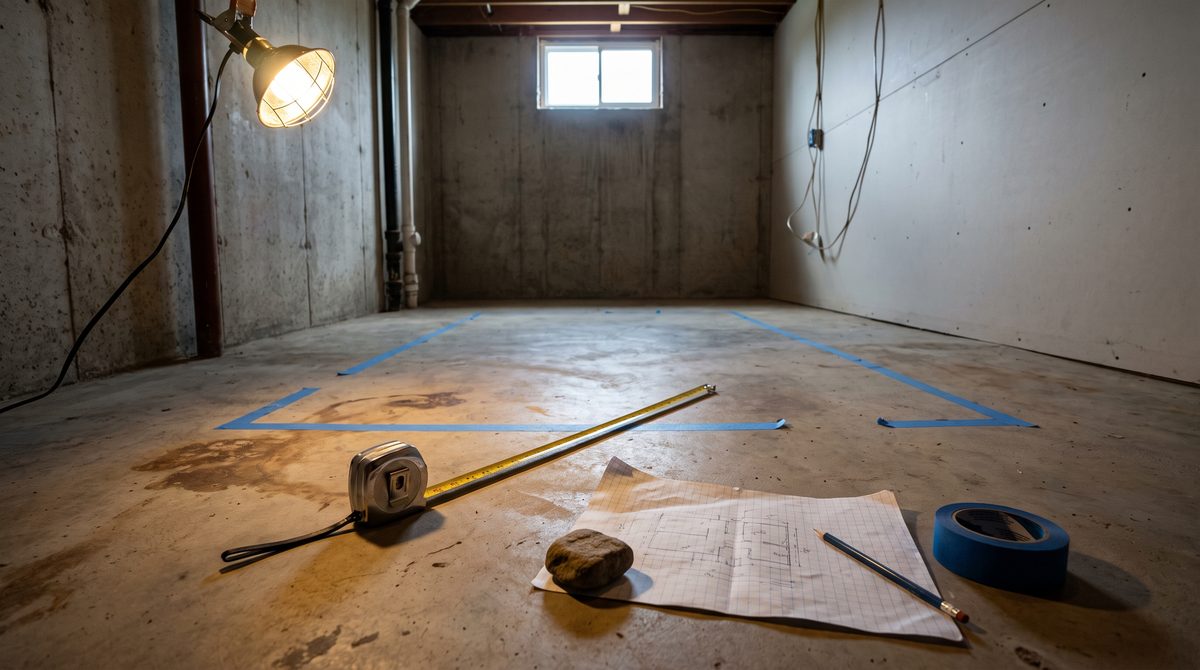
Measure the room. Everything else, the table size, the seat count, whether you need a dedicated table or a folding topper, follows from how much clear floor space you actually have to work with.