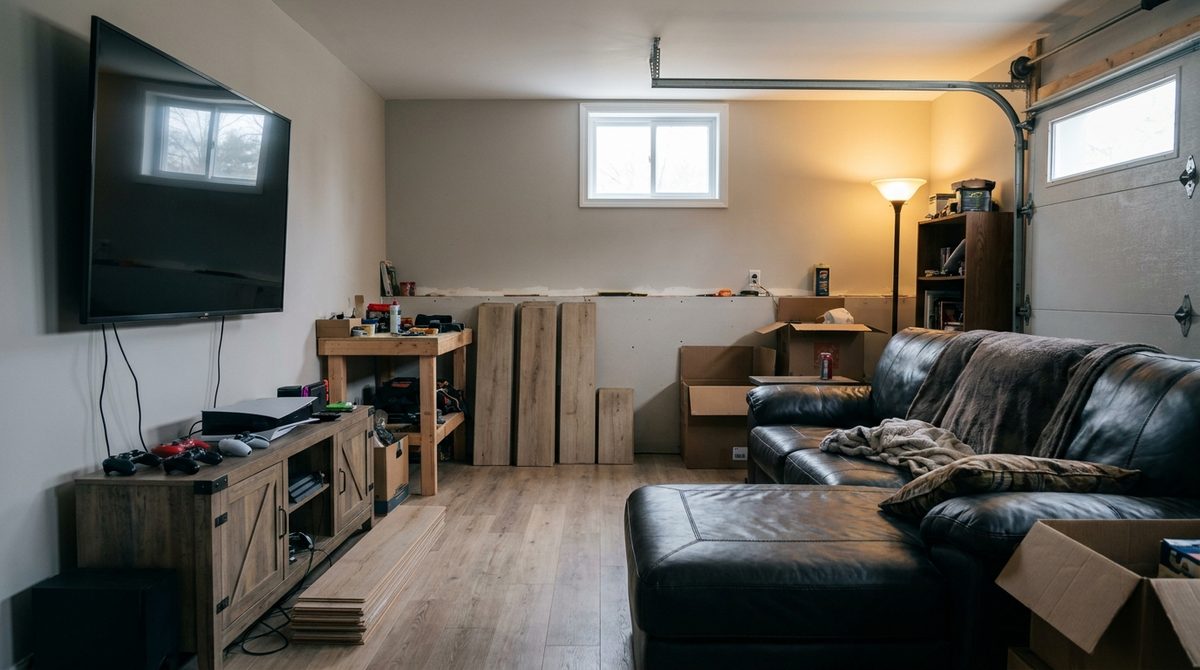
Most man cave budgets get spent in the wrong order and at the wrong time. The room ends up with an expensive screen and a chair nobody wants to sit in for more than an hour, bought at full price the week the idea got exciting. Fixing both problems is mostly a matter of sequence: what you buy first, and when in the calendar you buy it.
Where the money should go first
Before any category-by-category shopping list, decide the order of spending. It should not be the order that feels exciting.
Climate and comfort come before anything with a screen
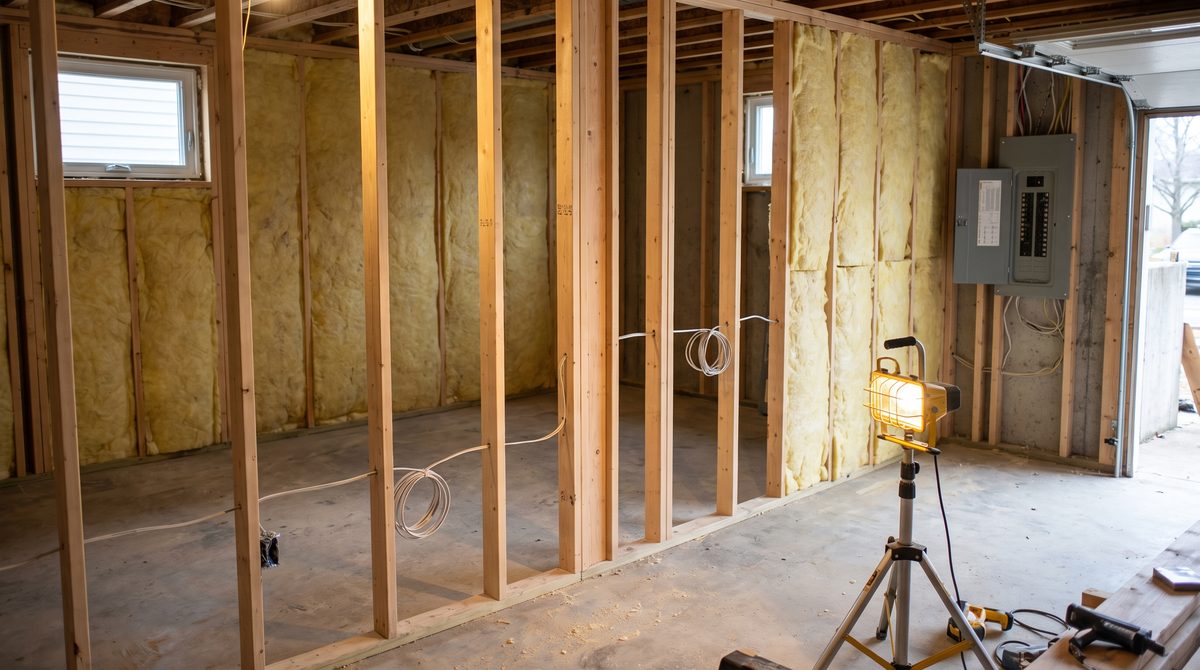
A man cave in a garage, basement, or converted spare room usually has one environmental problem the rest of the house doesn't: it's an add-on space, not part of the main HVAC run. If it gets too hot in summer, too cold in winter, or stays damp, none of the electronics or furniture in it will get used regardless of how much they cost. A portable or mini-split unit, a dehumidifier for a basement, or basic insulation and weatherstripping for a garage door is not a glamorous purchase, but it determines whether the room gets used in July and January or just in the mild months either side of them. Budget for this first, even if it means a smaller screen.
Seating is the second-most underspent category
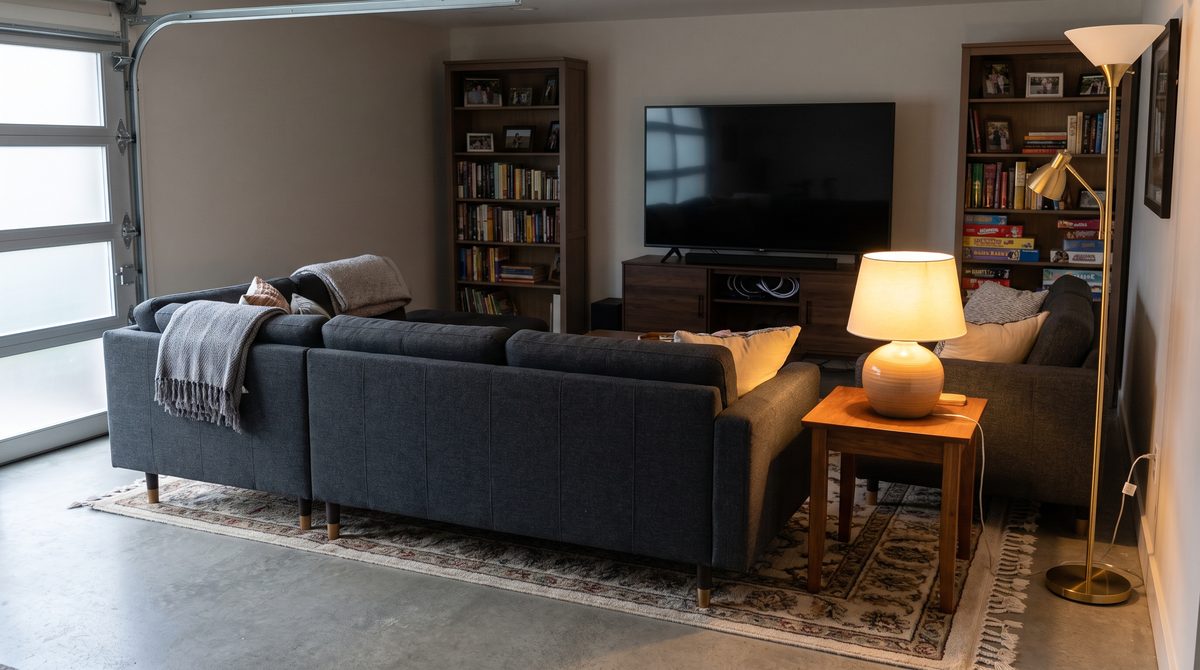
People will sit in a room for three hours during a game or a movie. They will not sit in a folding chair or a worn-out hand-me-down couch for three hours more than once. Seating takes the most physical wear of anything in the room and is what guests actually notice and remember, more than the size of the television behind it. A frame that will hold up, cushions that will not collapse in a year, and enough of it that people aren't standing, matter more than an upgrade in screen size that most people can't perceive past a certain point in a normal-sized room.
Lighting is cheap relative to what it fixes
A single overhead fixture makes any room feel like a garage, because in a lot of man caves, it is one. Layered lighting, a few lamps, some indirect light, maybe something dimmable, changes how the whole space reads for a cost that is small next to almost everything else on this list. It's the highest ratio of visual impact to dollars spent in the room, and it's routinely skipped because it doesn't feel like "the man cave" the way a screen or a bar does.
The screen is where restraint pays off
None of this argues against a good television, only against buying the biggest one available before the room around it can support it. A large screen in a room with bad lighting, an uncomfortable couch, and no climate control just makes those problems more visible. Buy a screen sized to the actual room and viewing distance, spend what's left over from the categories above, and treat any extra budget as an upgrade for later rather than the opening purchase.
Everything else is optional, in this order
A bar or beverage station, a pool table or other game, sound equipment beyond what the television already has, and decor are all genuinely optional. They make the room feel finished, but a room with good climate control, good seating, and good lighting is usable without any of them. A room with all of them and none of the basics is not.
When to buy: the timing that actually saves money
Once the order of spending is settled, the second lever is timing. Retailers move through predictable cycles, and buying in the wrong week means paying for the privilege of impatience.
Televisions: buy around the release cycle, not on impulse
Television manufacturers release new model years on a predictable schedule, and outgoing models get discounted to clear space for the new ones. The stretch leading into the Super Bowl is also a heavily promoted period for televisions, since it's the single biggest annual occasion for buying one. Waiting for either the new-model changeover or the pre-Super Bowl period, rather than buying the moment the idea for the room takes hold, is one of the more reliable timing plays in this project. The tradeoff is that the model on sale is usually last year's, which is almost always the right trade unless a specific new feature matters to you.
Furniture: end-of-season and holiday clearance
Furniture retailers clear inventory on a seasonal rhythm, with the deepest markdowns typically landing around the transition between seasons and around the major furniture-shopping holiday weekends through the year. If the room's seating, shelving, or a media console can wait a few weeks for one of those windows, it should. Furniture is also a category where waiting costs nothing but time, since a couch doesn't go obsolete the way a television does.
Outdoor and patio pieces: buy at the end of the season, not the start
If the man cave concept extends to a garage that opens onto a patio, or any outdoor seating and games, that category clears out hardest at the end of its selling season rather than the start. Retailers do not want to carry patio furniture, outdoor games, or grills through the off-season, so the discount lands right when most people have stopped thinking about it. This means planning a season ahead: buying outdoor furniture in late summer or fall for a room that won't be finished until the following spring, an easy trade if storage space allows it.
Appliances: holiday weekends are genuinely the pattern
If the room includes a mini-fridge, a beverage cooler, an ice maker, or a small kitchen setup, appliances follow one of the more consistent retail sale patterns, tied to major holiday weekends through the year. This is one of the few categories where the conventional wisdom about waiting for the holiday sale holds up, because appliance retailers reliably compete on price around those specific weekends.
Open box, floor models, and refurbished: know what's safe
Open box and floor model pricing exists because a box was opened, a display unit was handled, or a return came back with nothing wrong with it. For a television, an audio component, or a large furniture piece, this is usually safe, since the failure modes for those products show up quickly if they exist at all, and a return window covers that period. Manufacturer-refurbished electronics carry similar safety when they come with a warranty.
Riskier is anything without a warranty attached, or anything where "refurbished" doesn't specify who did the refurbishing. A no-name refurbished label with no return policy is a discount with no safety net, and the money saved isn't worth what it costs if the item fails in month two.
Secondhand: what holds up and what doesn't
Solid wood furniture, bar stools, pool tables, and other game tables are usually reasonable secondhand purchases, because their condition is visible on inspection and their failure points are structural rather than hidden. A pool table in particular is worth buying used from someone moving or downsizing, since a well-built table can last decades and moving one is enough of a hassle that sellers price to move it quickly.
Upholstered seating with unknown history is the opposite case. You can't inspect what's inside cushions or a frame for wear or moisture damage, and the visible fabric tells you little about what's underneath it. Anything electronic bought secondhand with no warranty and no return option carries the same problem: no way to know how much life is left in it, and no path to fixing that for free if it fails.
What to wait for and what to just buy
Televisions, furniture, and appliances are worth waiting for, because the calendar-based discount windows are real and predictable, and none of those categories loses much by sitting on a list for a month or two. Climate control equipment is the exception worth buying immediately regardless of season: a room that's unusable in the meantime costs more in lost time than any seasonal discount would save.
The false economy to watch for is buying cheap twice. A budget couch that needs replacing in a year, an undersized heater or air conditioner that gets swapped for a properly sized one, or a folding table standing in for real furniture, all cost more across two purchases than one correctly sized purchase would have cost the first time. If the budget can't stretch to the right version of something this month, wait for the next discount window on the right item rather than buy the wrong one now.
What to do first
Before buying anything, walk the room and address climate control if it needs it. That single step decides whether every other purchase in this guide gets used year-round or sits idle for half the year no matter how well the rest of the budget was spent.